Image
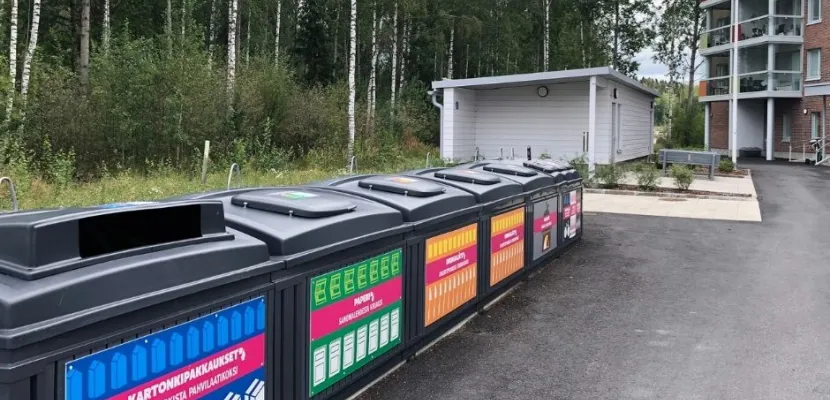
Local rubbish to raw material campaign promotes recycling
About this good practice
Published on 20 October 2021

Finland
Etelä-Suomi
This is the good practice's implementation level. It can be national, regional or local.
By recycling waste, citizens participate in climate action and a circular economy. Furthermore, it creates opportunities for new business, green growth, and employment. The practice introduced residents to rethink their waste and see it as a valuable raw material from which new products can be reproduced.
In March 2021, sensors were installed in the mixed waste bins of the 10 apartment buildings of Lahden Talot, which participated in the rubbish to raw material campaign. The sensors measured variation, volume and whether the amount of mixed waste decreases as residents were given information during the campaign. Information, such as what their waste might be recycled into and thus engaging them in a circular economy.
The trash bins were rebranded and communication efforts were made to simplify and clarify recycling. The 3-month long recycling campaign encouraged households to recycle better and to reduce the amount of mixed waste. In particular, biowaste misplaced in mixed waste. Per person, Finns throw annually 24 kg of food in the garbage, in total 35 million kilograms. Its monetary cost in euros is about 131 million. According to the EU municipal waste recycling rates, recycling should be increased to 55% by 2025. The current recycling rate of municipal waste in Finland is 41%. For 2030, the target will rise to 60%. In Lahti, household waste recovery rates are 99%, from which a large part is burned to energy.
Resources needed
The recycling campaign was carried out in partnership with Lahti Green Capital 2021, Rodinia communication firm, Lahden Talot, Salpakierto regional waste management company, municipal transportation and private companies. The campaign was promoted in the newspapers and social media.
Evidence of success
With the help of the sensors, the volume of waste was monitored in real-time. The sensors confirmed improved recycling, as mixed waste was reduced in over half of the buildings involved. In 3 months-time the largest reduction of mixed waste was in one building by -17,2 per cent. When residents are encouraged to recycle more efficiently, the waste management costs for the apartment building are reduced.
Potential for learning or transfer
Reducing mixed waste was one of the main objectives of the campaign. In Lahti, around 70% of mixed waste is recyclable. In addition, mixed waste is the most expensive type of waste for housing companies, hence there are also economic benefits to making recycling more efficient.
The project involves several actors from different sectors who can contribute together to the development of waste management. Following the pilot project, the experience will also be used in other waste management areas in Finland.
Recycling reduces emissions and significantly saves both natural resources and energy. Implementing technology with waste management is beneficial. With sensors installed in waste bins that measure the volume of the bins and transmit the information in almost real-time to a mobile app, can make waste management more feasible and successful. Sensors are widely used in countries, such as Denmark.
Further information
Website
Good practice owner
You can contact the good practice owner below for more detailed information.
Organisation
LAB
Finland
Etelä-Suomi
Contact
RDI Specialist